Rachel's Journey
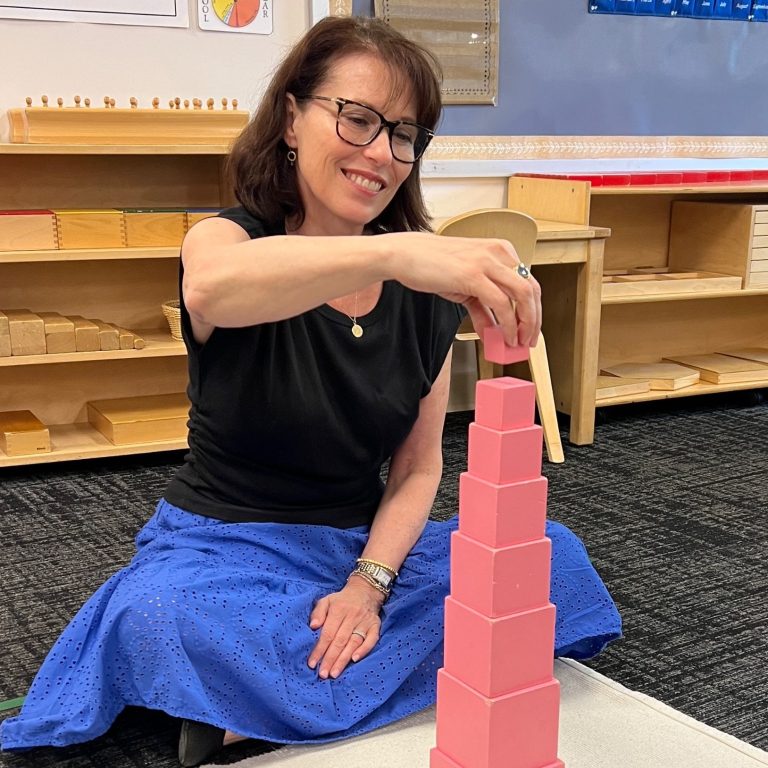
My passion for helping children began in college. Outside of my traditional training, I was trained in “Orton Gillingham,” a specialized method of teaching children with dyslexia to read. I decided then that traditional teaching was not for me, but working with children certainly was. The summer after I graduated, I started my journey, training to be a Montessori teacher. During this time, I also continued working with tutoring children utilizing Orton Gillingham.
During my second year as a Montessori teacher, I was introduced to Joyce Pickering and her incredible school. The June Shelton School in Dallas TX is a school PreK- 12 for children with learning differences. Joyce created and developed a framework of identifying and supporting PreK children with diverse needs in a Montessori setting. The school has Montessori classrooms for preK-3rd.grade. Meeting Joyce was a pivotal experience for me because her school beautifully merged the two aspects of education that I was passionate about. I took their summer program called Montessori Applied to Children at Risk (MACAR). I loved it so much that the next year I moved to Dallas to work at this school. It was an incredible learning experience. Through their in-house training as well as the multitude of classes in subjects related to special education I took at nearby universities, including Speech and Language and Learning Differences, I gained invaluable knowledge and experience.
After 3 years in Dallas, I moved to Arlington to fulfill the dream of teaching in a public Montessori setting. In Arlington I continued my work teaching children. I worked with students and parents to support and teach both typically developing children as well as children who were later identified as having special needs. Additionally, I opened my classroom to special education students supporting integration.
In 2018 I advocated for and then piloted a Montessori integrated co-taught classroom. In this program, I am the special education teacher co-teaching in a Montessori classroom. Here, I continue to work with all students, but I specifically work with students who have special needs. My responsibilities include working closely with parents, testing and interpreting testing, writing reports, creating and developing Individualized Educational Plans (IEPs), data collection, and collaboratively working with co-teachers, service providers and administration.
Teaching adults
In addition to my work with parents and children, in 2002 I joined the faculty of a Montessori training center for adult learners. I continue this work today, teaching in the core curriculum area of Language (Reading), as well as a course centered on working with students with diverse needs. Training and working with adult learners while they are on their quest to become Montessori teachers is an incredibly fulfilling endeavor. Sending new teachers out into the world with the training, perspective and skills to support children in their language and reading development, equipped with knowledge of learning differences and special needs enables me to have an influence well beyond my own classroom teaching.
Turns out, this work is personal
I adopted my daughter as a single mother in March of 2012 . For me becoming a mother was the most important thing I will ever do. What I did not expect was the positive impact its perspective would have on me professionally (I now understood how parents feel and see their children). My own daughter has so many strengths and gifts. She is a dancer, an artist, an extrovert, kind and so very thoughtful, introspective and empathetic.
Based on my extensive professional experience, I was able to see that as a preschooler my daughter was displaying signs that she had special needs. Realizing this at such an early age, sent me off to better understand and advocate for her specific needs. So, now I was working not only as a teacher of students with special needs, but as a parent of one.
As a life long Montessori teacher, naturally I had enrolled her in the most wonderful, small and loving Montessori school I could find. She was there from ages 1-7. My vision was that she would continue as a Montessori student, but once I recognized and accepted her needs, I was determined to find the best possible environment for her learning profile. After extensive research, analysis and comparison, I found what I still consider the ideal option for her in what happened to be in a non-Montessori setting. It has been a wonderful fit–she attended there for elementary and middle school, and is continuing to go for high school as well.
Even knowing all that I know and all of my professional experience, it was (and still is!) often hard as a parent to fully understand her evolving needs and how I can best support and effectively advocate. Every child is different in how they present and demonstrate their challenges, and in what they need from their educational environment. My personal experiences have reinforced my recognition of the importance of considering the individual child and family in making educational choices.